当前位置:首页 > 时文闯关 > 颐和园年度环志监测:北京雨燕迁徙守护见成效(语法填空)
颐和园年度环志监测:北京雨燕迁徙守护见成效(语法填空)
中等
难度
说明文
时文类型
自然
时文话题
高中二年级
适合年级

奇速优课
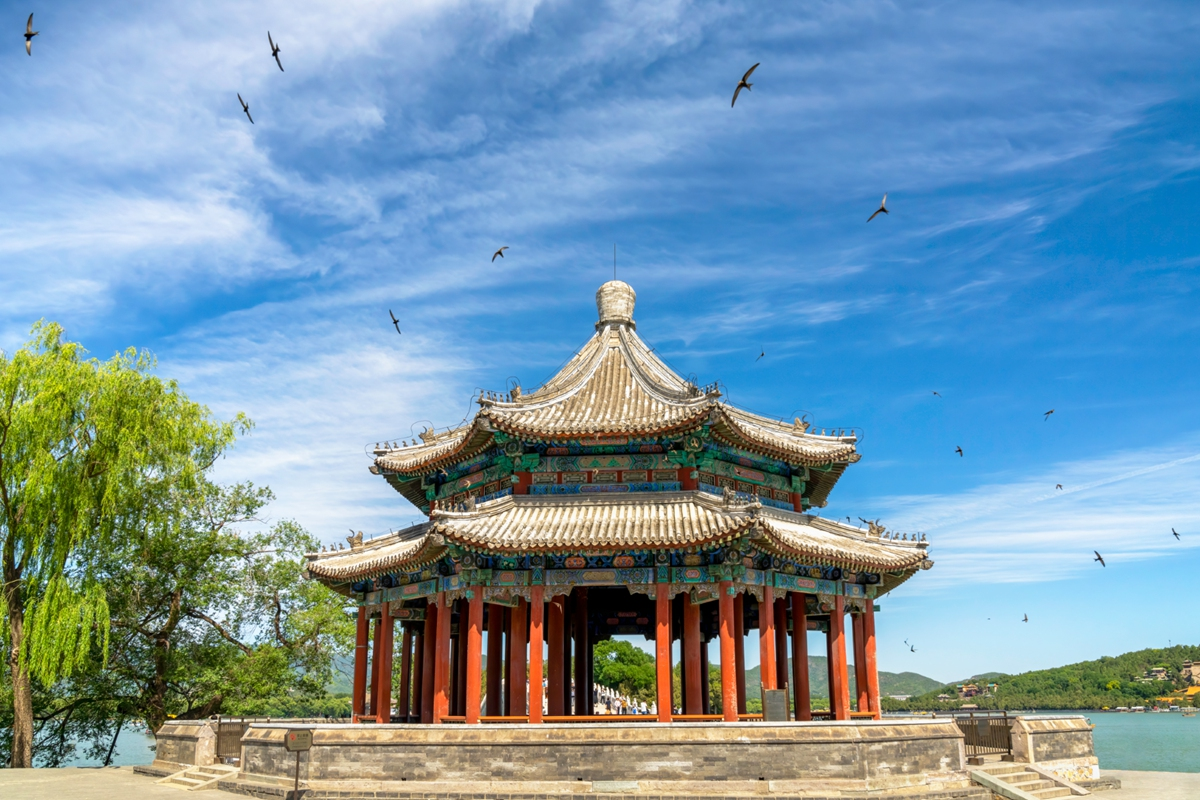
Every year from late May to early June, routine banding work for Beijing swifts (雨燕) is carried out at the Summer Palace. This year, a total of 89 swifts received careful physical examinations and ___1___ (profession) banding. Using harmless mist-netting skills, staff ___2___ (gentle) caught the birds and moved them to inspection stations. Specialists fitted each swift with a unique numbered metal leg band from China’s National Bird Banding Center and recorded key biological data like body weight and length before ___3___ ( release) them back to the wild.
Bird banding is a vital scientific method ___4___ (track) migratory birds’ routes, life cycles and population changes. Since the 1990s, researchers have stuck ___5___ this annual program at the palace’s Kuoru Pavilion. Among the 89 banded swifts this year, 23 were new individuals while 66 were recaptured ones, ___6___ (mark) a 74 percent recapture rate. The high rate proves that Beijing swifts are highly loyal to their nesting sites and enjoy a stable living environment with steady population reproduction.
For decades, Beijing swifts have chosen the Summer Palace as their ideal habitat. They complete an amazing 10,000-kilometer ___7___ (migrate) yearly: traveling from southern Africa to Beijing in mid-April to nest under ancient building eaves (屋檐), breed and raise chicks, before flying back south in July and August. Kunming Lake is rich in insects, providing sufficient food for ___8___ (they) young.
As a precious ecological and cultural symbol, Beijing swifts inspired Nini, a mascot for the 2008 Beijing Olympics, and served for the Beijing Central Axis’ World Heritage application. To protect them, the Summer Palace ___9___ (adopt) closed protection measures since 2019. It also trains patrol (巡逻) staff to rescue fallen young swifts and holds public education activities annually to raise ___10___ (aware) of bird protection.
原创编写 版权所有 侵权必究 每日更新 个性化阅读 英语飙升
微信用户 Jun 11, 2026 9:18:22 AM
"Shall I compare thee to a summer's day? Thou art more lovely and more temperate."
!
微信用户 Jun 11, 2026 9:18:27 AM
"Shall I compare thee to a summer's day? Thou art more lovely and more temperate."
!
微信用户 Jun 11, 2026 9:18:31 AM
"Shall I compare thee to a summer's day? Thou art more lovely and more temperate."
!
oUm2H1UNJxweBC6ZewH-1qv2UcbU Jun 11, 2026 11:06:38 PM
iejndbdbecehdh
!
微信用户 Jun 12, 2026 10:23:05 PM
:hzdbjnlcgbkxfjvlngx
!
微信用户 Jun 12, 2026 10:23:10 PM
Nbfzbjbifxlnxgkbhclnvhjv
!
微信用户 Jun 12, 2026 10:23:16 PM
Nfxjbkbfxnkvjhclnkb
!
微信用户 Jun 12, 2026 10:23:21 PM
Njxfjbbjxfkn.hlnj m jv
!